Archives for posts with tag: Branding

In the most recent issue of the Journal of Brand Strategy, Casey Jones and Daniel Bonevac, both of BriefLogic, claim to have come up with a clear, irrefutable formula for how to define a brand:

Brand = Category + Differences

I pretty much disagree. This not only implies, but the authors state outright that a company can create and own a brand. You can read about the reasons for my disagreement in my previous posts on this topic: You Don’t Have a Brand and The Successful Brand Steward.

While they wholly missed the truth, they also didn’t miss by much. Here’s my fix:

Identity = Category + Differences

That’s a winner! Knowing who you are and how you compare is huge. This is the basis for a dialog with prospects and customers. Now you just need to work on your corporate culture.

You’re welcome.

When I was living on the East Coast, traveling to the West Coast posed no problems for productivity and alertness. Flying across country one would lose very little time, and due to the three-hour time difference, getting up early in the morning was also a cinch.

Now I live on West Coast time. AZ doesn’t play that Daylight Saving Time game, meaning, that for most of the year (March 10th to November 3rd; or as I call it, Conference Season) our time is actually equivalent to PDT, because we are always on MST, while the rest of you waffle back and forth.

Traveling to the East Coast is a chore. Often meetings and conferences start at 7:00 AM—especially when you are an exhibitor—meaning you have to get up at 6:00 AM, which is 3:00 AM your body clock.

That means, in order to get a good night’s sleep one also needs to go to bed [relatively] early. Going to bed between 9:00 to 10:00 PM East Coast time means my body thinks I’m trying to go to sleep between 6:00 to 7:00 PM per my body clock. That takes some coaxing.

I’ve never take prescription sleep aids, but do purchase “non-habit forming” OTC pills to help me get to sleep on those trips. So when my wife handed me a $3-off coupon for ZzzQuil (from the makers of NyQuil!) I thought I could save some money. I stopped taking NyQuil when they took out the sleepy stuff, and was excited to see I could get the sleepy stuff again from a brand that has previously served me well.

Here I was at the store holding a 24-count box of ZzzQuil (suggested retail price of $11.99) when I decided to look at the active ingredient: Diphenhydramine HCL. That sounded familiar… So I acted on a hunch, turned around and grabbed a box of Benadryl to look at it’s active ingredient: Diphenhydramine HCL. And at the exact same dosage: 25mg. Except that a 48-count box of Benadryl has a suggested retail price of $8.99.

It’s not difficult to figure out which the better deal is.

The question, however, is which is the stronger brand? Benadryl is definitely a strong brand name. It comes to mind immediately (unaided recall) when considering an allergy remedy, and the ingredient Diphenhydramine HCL is often simply referred to as Benadryl.

But why would Vicks be able to command a better than 150% price premium, when brand differentiation typically tops out at a 25-30% price premium for like products? Does it really have that much better brand recognition than Benadryl?

The answer to the question probably isn’t brand, but positioning. Without any empirical research I simply have to assume that Vicks plays in a market that solves short-term problems (e.g. flu symptoms) to which immediate solutions are needed, vs Benadryl, which handles long[er]-term problems (e.g., seasonal allergies) that also require a longer-term investment. I’ll pay just about anything to get over this cold quickly, but since there is no way to control the weather, seasons, and pollen, I’ll pay as little as necessary to remedy problems that will recur not matter what.

Additionally, I can tell you that OTC sleep aids are not cheap, so Vicks should be able to easily maintain pricing power with this brand extension. It’ll be worth watching how Vicks fares in that arena over time, and if enough people might catch on to the cheaper alternative. Benadryl (McNEIL-PPC, Inc., actually) might not be able to do anything—can’t openly compete against ZzzQuil—because they can’t jeopardize the positioning they’ve created for themselves.

Vicks’ only problem might be that if consumers learn of this and feel taken advantage they might vote with their wallets and pocketbooks against Vicks’ other brands as well.

At play is a possibly risky pricing strategy that has a chance to blow up and do larger damage than just cutting into ZzzQuil’s profit margin. On the other hand, Vicks might just be raking it in until then, and they might never get found out. And if Vicks does need to drop ZzzQuil’s price, that just might set off a price war in OTC sleep aids. Hallelujah.

Let’s get ready to rumble.

Lesson to marketers: know the risks you are taking and plan for the various scenarios.

Last week I attended BtoB Magazine’s “The Evolving B2B Purchase Process: Conquering Unpredictability with Full-Funnel Marketing” webinar. Very interesting research findings were presented, and the Q&A was excellent.

The last question in the Q&A drove me crazy, however: Where and how do we begin our marketing efforts for “…a relatively new brand with no awareness?”

It wasn’t the content of the question that bothered me—and the answer was very good—it’s the context that gave me palpitations, and almost caused me to scream “YOU DON’T HAVE A BRAND!” into my headset. Of course, in cyberspace no one can hear you scream, especially when you are on mute.

I hold in strong belief—and have previously stated here—that brands are not “made” nor “owned” by companies, but by consumers. Companies may own trademarks, but branding is a consumer’s mental process. Companies try to influence this process, yet ultimately they have no true control over it. Correlation of a consumer action to a marketer’s efforts does not equal its causation.

I’ve never been able to prove my belief. Finally, however, I happened upon a model that echoes my own conviction: McCracken’s Meaning Transfer Model.

In “Who is the Celebrity Endorser? Cultural Foundations of the Endorsement Process” (Journal of Consumer Research, Vol. 16, No. 3 (Dec., 1989), pp. 310-321; available on JSTOR), McCracken stipulates that “there is a conventional path for the movement of cultural meaning in consumer societies.”

While the article speaks to celebrity endorsements—how a personality imbues its persona onto a product—the model’s underpinnings rest on “cultural foundations” (read: psychology) shared by all of us (in the West).

There are three steps in the model. First, to pick the right celebrity “the advertiser identifies the cultural meanings intended for the product.” This speaks to product positioning—not tactically (conventional benefits) or strategically (competitive benefits), but psychologically. Think BMW’s “Ultimate Driving Machine,” versus Volvo’s safety and security positioning. Both are cars that will get you to where you want to go, but their positioning appeals to different audiences. This is where companies place their marketing chips for decades.

Next, “the advertiser surveys the culturally constituted world for the objects, persons, and contexts that already contain and give voice to these mednings.” The producer/advertiser seeks an individual/celebrity possessing elements congruent with the psychological profile they are trying to assign to their product. The advertiser similarly hopes that aspiration to these traits is resident within the target buyer. For example, Sebastian Vettel might be a good celebrity endorser for the Ultimate Driving Machine. For our purpose the object does not have to be a celebrity, but can be anything else that already carries the intended strong metaphorical meaning. Granite, for example, can represent the foundational financial strength that a bank wishes to emphasize.

Third, “the final act of meaning transfer is performed by the consumer, who must glimpse in a moment of recognition an essential similarity between the elements and the product in the ad…Consumers turn to their goods not only as bundles of utility with which to serve functions and satisfy needs, but also as bundles of meaning with which to fashion who they are and the world in which they live (Belk 1988).”

Just in case you didn’t catch that, while the meaning transfer steps are linear and sequential, 1-2-3, the meaning transfer motion is not. Meaning is not transferred from the producer into the product, and then from the product to the consumer. Consumers transfer their own meaning onto the product! The consumer has to be accepting and complicit in permitting the producer’s hoped for meaning—but the consumer may very simply attach an entirely unintended meaning, away from the producer’s intent. This is why consumer insights departments are so critical.

When consumers attach the same meaning repeatedly, and that action constitutes a preference over a product with similar tactical benefits, then brand-creation is in process, but not yet complete. A product is only a brand when it is chosen often enough, with high repetition, by a large number of people within the addressable target audience. Otherwise a product is just a commodity, regardless of price or positioning.

A good example of consumer brand ownership is Tropicana Orange Juice’s “rebranding” a few years back. A simple packaging change—the actual product inside the package had not changed—destroyed the meaning that consumers had themselves attached to the product. The updated look of the juice container was described as generic, and generic juice at a premium price was incongruent with consumers’ psychological needs. Ultimately, Tropicana was forced to retreat.

Most importantly, it means that companies must continuously research and learn why consumers are choosing their products, and then for the same product target the correctly personalized message at the right audience, in the right channel. Mixed messaging sends mixed signals that cause confusion and lead to brand erosion.

It also means that companies are not brand owners, they are brand stewards.

CMOs get no respect. They have a lot of expectations placed on them—sometimes even quota—but marketers have no credibility with CEOs (“73% of CEOs say marketers lack credibility”, Lara O’Reilly, Marketing Week, June 2011), and marketing doesn’t have the board’s ear either (“Why CEOs Can’t Blame Marketing or Sales for Lack of Alignment”, Christine Crandell, Forbes, February 2011).

Both articles claim different reasons for the lack of respect. Lara O’Reilly cites a study by Fournaise that makes very good points why the CMO is at fault, and Christine Crandell opines eloquently why the CEO is to blame for the lack of respect the CMO gets.

The general complaint is that marketers cannot prove with certainty how much impact their efforts have on the top-line of the business (my opinion: because marketing is a process that takes time, and it’s difficult to measure any network effect with precision).

Jerome Fontaine, CEO and chief tracker of Fournaise, says that “. . . marketers [need to] start speaking the P&L language of their CEOs. . .” CEOs want CMOs to have a greater grasp of the business, not just the pretty side of relationship building. CEOs want to know about “revenue, sales, EBIT and market valuation.”

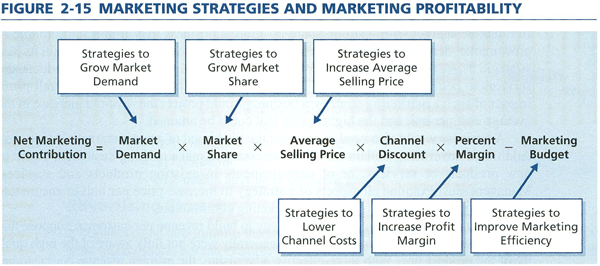
Market-Based Management: Strategies for Growing Customer Value and Profitability (Pearson Prentice Hall, Fifth Edition, 2009)—a fantastic book for anyone who needs to grasp the basic concept that marketing is a lot more than promotion and advertising—offers a simple formula to show what incremental revenues marketing produces:

Net Marketing Contribution, Roger-Best, Pearson Prentice Hall

Net Marketing Contribution, Roger-Best, ©2009 Pearson Prentice Hall

McKinsey even published a whole article on “Measuring marketing’s worth” (see previous post). The article tries to teach the CEO how to appreciate the CMO. Instead, in my opinion, the article is actually an excellent blueprint to help aspiring CMOs prepare for their larger role. Still, ROI does little to convince the CEO that the CMO is moving the needle in an appreciable fashion.

The more serious problem appears to be that the two sides do not understand one another. The CEO doesn’t understand marketing beyond promotion and advertising. The CMO doesn’t understand accounting and finance. Two ships passing in the night.

Let’s have a brief look at both positions.

CEOs are captains of the ship. They must have an understanding of every core discipline in the company, even if they themselves cannot be expert at everything. That’s why they hire very smart people to do the things they themselves don’t have the time or knowhow to do well consistently. CEOs are also the face of the company, and in some ways must embody the brand. They must be super-smart brand ambassadors in both B2B and B2C settings.

The CEO is responsible for:

  • Corporate performance—profitability and valuation.
  • Corporate strategy—assuring that the company remains a successful going concern.
  • Capitalization—so that the company can reinvest in growth and innovation.
  • Corporate culture—creating the desired climate and leading by example.
  • The C-Suite—recruiting the best executive talent so that the company outperforms.
  • Executive performance—understanding the correct performance metrics (Christine Crandell’s point).

CMOs are brand-builders who craft unique and powerful value propositions. If all they think themselves responsible for is lead generation, then they are only advertisers. CMOs must want to influence innovation (through voice of the customer and competitive positioning), and lead sales, marketing, and customer care. You read correctly; I believe the marketing department must own the customer (customer lifecycle management). Sales, promotion, advertising, and customer care are all functions of marketing; marketing being the discipline of bringing a product into the market successfully. And a sale is not successful unless the customer is happy long-term.

The CMO is responsible for:

  • Competitive strategy—being one step ahead of direct competitors, new entrants, and substitutes.
  • Branding/positioning—placing irresistible core values in the buyer’s mind.
  • The customer—lifetime customer satisfaction and perceived value.
  • Pricing—for the greatest lifetime profit and customer retention (not volume-based).
  • Corporate image—the public perception of the company.
  • Lead generation—meaningful and authentic message dissemination that moves markets.

So apparently there is little overlap between the CEO’s and CMO’s responsibilities. Crazy, since they are co-pilots for success.

Back to the Fournaise study. Revenues, sales, and EBIT are accounting principles. Valuation is a finance principle.

Basic accounting principles are easily learned. I bet there’s a good Dummies-book out there. Now it finally dawns on us: we marketers are hated by everyone in the company who values a balance sheet. Marketing, the entire department—overhead and all marketing activities—is an expense. No wonder there is such a myopic focus on ROI and lead generation. CMOs must perform by the fiscal year calendar, which pretty much kills any long-term strategic and tactical initiatives around building a brand.

The only time marketing expenses are “good” is when they create a total corporate loss that the company can then write off in subsequent periods. That in itself is an untenable situation.

Accountants lord over the marketing department, however subtly.

To win real respect, CMO’s must increase the value of the company beyond the sum of its future earnings. Good ones do, but few of them know how to prove it. And that’s the real rub: CEOs and accountants want CMOs to prove something that they’re not permitted to prove by accounting standards.

Goodwill—what I call the toilet bowl of the balance sheet, because it’s essentially a bunch of hooey—does not permit for the accounting of internally created value (read: brands). Only acquired brands can be accounted for on the balance sheet under goodwill. That math is actually very simple: brand value is the difference between the book value of a company, and what it was actually acquired for. And that’s the needle (read: multiple) that the CMO has to move.

Which needle? The valuation needle.

So, don’t get another MBA, this time in finance. Learn about valuation via an adult-ed course at your local community college or take an online course. Even a simple search for “company valuation” on Investopedia brings up great results.

These are not tricky concepts, but they do take time to acquire as skills. The best thing you can do is practice for a little while, and then begin to build a valuation model for your company that you test over time, and that shows how you are moving the needle (or could be moving the needle given permission).

Give it some months, then you spring it on your boss and. . .*BAM*:

  • Instant credibility with the CEO and the board.
  • Bigger budget!
  • Permission for long-term strategic planning and tactical execution.
  • Increased self-worth (and probably pay if you negotiate well at the close of the fiscal year).

And now for the real conclusion: career advancement is not the real benefit here.

There are many different valuation models, and valuation, for the most part, is a bunch of hooey, too. It’s like selling your home, which is worth only what someone else is willing to pay for it, not what you think it is worth. The book value of your home is the worth of the land and the dwelling on it—at cost. That’s what you pay taxes on. But you know that there’s additional value in the place. And that value is determined by many factors: listing price of comparable dwellings, ranking of school district, quality of home construction, proximity to emergency services, etc. These and other factors give your home value beyond book.

The better prepared you are for your buyer—the better you can support your arguments in your valuation model—the more likely you can affect a positive outcome for yourself. That’s because valuation teaches you to examine where and how marketing adds value to the company. And when you understand that, you also market better.

And that’s how you build a brand, by listening to the market and understanding how to respond. Your model will tell you what to pay attention to. What are brands? They are needle-movers; they get chosen more frequently, even at higher prices. You can be a needle-mover, too.

[And thus finance quietly trumps accounting. But don’t tell the accountants.]
Lois Geller has a great blog on Forbes. Yesterday’s post, “Why A Brand Matters,” gives a simple, common-sense overview of how your business can benefit from having a brand.

Here are two other great reasons:

  • Strong consumer goods brands get to charge 25-30% more for the same thing than non-brands.
  • Brands with a vast number of net-promoters out-revenue their competitors 2:1.

That means even at the higher price you get chosen more often, and that drops directly to the bottom-line (if your costing and pricing is right)!

Personally, I wouldn’t use one of the globally most recognized logos as a major design element for my car. Or, perhaps it’s incredibly inventive youth marketing?

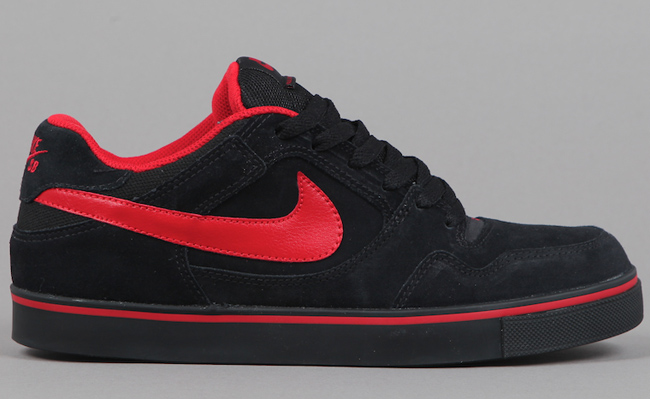
Red Swoosh

The original Swoosh application.

Nissan Juke with Nike "Swoosh"

Nissan Juke with Nike “Swoosh”