Archives for category: Marketing

One way I generate interest in our product, and start conversations with business decision-makers, is to sponsor and exhibit at high-level but intimate industry events. There I hold a contest to generate awareness of our company and move conversations along.

It’s a true contest—not a drawing—and the top two best participants each wins a prize (it pays to come in second!). We often receive praise for how realistically the contest mimics a high-risk issue the industry is currently experiencing, and how much fun it is to participate. People like the prize, too.

The prize is, and has been for a long time, the current version of an Apple iPad. I’ve been doing this since the iPad first came out (even awarding one a few weeks before it became available commercially). People love them…and I love people.

In the past twelve months alone I’ve placed orders for 24 iPads—24 winners!

After the event, once back home, I place separate orders via Apple’s online store, and have the iPads shipped directly to the winners. Everyone’s happy: the winners get their prizes, we generate goodwill and possibly enter into sales cycles, and even Apple makes money off our success. What could possibly go wrong?

Today’s order got canceled by Apple. This one really hurts, as an existing customer won the iPad. You see, after you’ve become a customer of ours, we still like you.

The automated cancellation email stated the following:

Apple is unable to fulfill orders that exceed the quantity limit per customer, or that ship to an international, freight forwarder, or an APO/AFO address.

Since my recipient is located in Texas, and I was shipping to the street address of the business, I was rather curious to find out what the violation was. After calling Apple, I’ve learned that I am a channel violator. I’ve placed too many orders (at full price, mind you), and the current order will not be un-canceled and shipped.

I am too good a customer.

Dave Stuart, Apple Business Representative, tells me that Apple will not sell me iPads if I wish to give them away as prizes, but they will sell me gift cards at the same value (and would I like to purchase one?).

I’ve been cut off.

Just you wait until they find out that I’ve gamed the system (unknowingly). Last October I placed an order for an iPad as a gift for my wife. I used my personal credit card, which has a different billing address than the corporate credit card. But I’m still the same violator. I just told my wife I probably wasn’t permitted to give her that gift, and she’s none too pleased…

Just like US Airways (see post), Apple punishes its good customers.

Marketers listen up: There has got to be a better way!
Anyone who has studied brand strategy and Barbie’s entry into China via its flagship store in Shanghai is still in slack-jawed awe over its complete failure.

However, if you listen to—and believe—Richard Dickson, former GM and SVP of Barbie, Mattel, Inc., it appears to have been a planned failure that is paying dividends.

On “Building Brands for Asia” (Bloomberg TV’s Singapore Sessions), Betty Liu asks about the difficulty of successfully introducing the Barbie brand into the market. Mr. Dickson answered with the following:

I don’t think it’s necessarily that the consumer didn’t take to the store or the Barbie brand. In fact, all signals suggest that the market opportunity for the Mattel brands in China is significant. Barbie is probably one of the most iconic toy brands in the world, if not real literally lifestyle pop culture icons in the world.

Past success is not an indicator of future performance. And yes, the consumer did not take to the store or the brand.

Research suggests, and certainly all indications are that brand will be enormous in China. The brand recognition is through the roof and the aspirational qualities of that brand suggest it could be a very big business.

Is brand recognition itself the correct metric to predict future success? How are you collecting your consumer insights?

The execution of the branded strategies had a varied degree of success and trial and error. We built a flagship store in Shanghai that personified the brand, gave it a true experience, included every aspect of the brand, and it really served as an incubation, a test. We understood at that time what was working and wasn’t working, and were able to take all of those insights and redevelop the strategic approach of how to continue the brand’s growth in China.

No way that store was meant to be an incubator, an experiment, especially when considering the cost of opening up a flagship store in Shanghai, and the brand equity that was at stake.

There’s an incredible amount of learnings that went into that project. It was the first time the Barbie brand was brought to life in a four-wall experience. That included not only product but also experience itself. All of the amazing imaginative things that Mattel had applied to the Barbe brand and were personified in that research tool that basically redefined even the visual language of the brand.

Failure certainly turned it into a good research tool. And I bet the lessons were meaningful.

So while, as a store it may not have been as successful as the company wanted, in terms of narrating the brand’s future, it was absolutely essential.

Job well done!

My last remark: Richard Dickson never says “we,” referring only to “the brand” and “Mattel” (as in “them”). I guess he was just an innocent bystander.

It’s true that in business you want to fail fast. You also want to analyze your successes and failures. However, you don’t plan to fail, you plan for failure.

Strategy requires “…a diagnosis of the situation, the choice of an overall guiding policy, and the design of coherent action.” (Richard P. Rumelt, Good Strategy/Bad Strategy, New York: Crown Business, 2011). It needs to be situationally and culturally appropriate—else it’s not a strategy. Market research falls within that guideline. For example, the Chinese do not like anatomically correct dolls.

I don’t know Richard Dickson, and he is credited with reviving the Barbie brand. He seemed, however, incapable of acculturating Barbie. Today Mr. Dickson is President and CEO, Branded Business, at The Jones Group. I bet he learned a ton by analyzing Barbie’s failure in China; just about everything else he said on the show was spot-on! How his personal growth benefits Mattel I’m unsure of.

If you cannot find local resources to help you penetrate a market successfully, then at least find someone who can ask the right questions. Relaunching a brand in any part of the world is significantly more difficult than nearly destroying it.

Last weekend, watching the Spanish Grand Prix F1 race (on my couch), I saw a commercial for Kumho Tires, identifying itself as an official sponsor of U.S. Soccer. I found this odd. Why does does that sport need a tire sponsor, and why would F1 racing fans care that Kumho Tires sponsors that sport?

Then, flying to New Orleans on American Airlines to an event I was co-sponsoring (exhibiting at an ERP vendor’s annual SIG meeting in exchange for a speaking slot), I saw an ad in the in-flight magazine for Casillero del Diablo as the official wine partner of Manchester United.

Again, why does a soccer/football club need a wine sponsor, and who in the U.S. really cares about ManU (one of the globally most recognizable sports brands, but with little-to-no recognition value by the general public in the U.S.)?

Here are my guidelines to a successful sponsorship:

  1. Make sure that what you are sponsoring elevates you, rather than the other way around, and
  2. Make sure that the audience consuming your sponsorship welcomes your involvement and can react meaningfully.

This is different from goodwill marketing, where you truly want to give something back to the community without expecting a tangible return. I question whether soccer fans will buy Kumho Tires, Castrol motor oil, Yingli Solar equipment, or Century 21-marketed homes just because these companies “sponsor” U.S. Soccer.

On the other hand, I wish Envirocon Technologies would sponsor me, as I’ve been a phenomenal net promoter for Lemi Shine®.

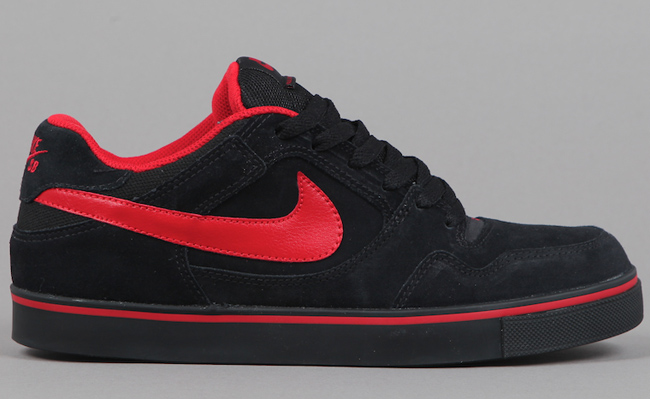
Personally, I wouldn’t use one of the globally most recognized logos as a major design element for my car. Or, perhaps it’s incredibly inventive youth marketing?

Red Swoosh

The original Swoosh application.

Nissan Juke with Nike "Swoosh"

Nissan Juke with Nike “Swoosh”

Living presently in Phoenix makes US Airways my default airline, as it has the most connections out of here. Because of that I signed up for a US Airways Dividend Miles credit card. However, I just don’t care about the dining rewards, and consider the regular email updates clutter in my inbox.

Imagine my surprise when the following message popped up during the email unsubscription process:

Choosing not to receive email updates will reduce your benefits to one mile per two dollars spent. Additionally, you will not be eligible for any current or future dining bonuses.

Only members who have signed up to receive emails and provided a valid, deliverable email address are eligible for our best rewards.

Please uncheck the opt-out box before proceeding to ensure you receive the maximum rewards for this program.

The opt-out mechanism is advising me not to opt-out unless I want to be punished!

In marketing you clearly want to reward your best customers, and you want to get rid of your worst. But is it really in your best interest to punish your good customers (I fly on US Airways 20-30 times a year)?

A few days ago my friend Ronald Bradford sent me the following one-line email.

Even in my own city, I am unknown!

Ronald is a database scalability and performance consultant and has numerous accolades and awards to his name. Soon he will have four MySQL books published as part of the Oracle series (two presently). His clients have included eBay, Electronic Arts, Thomson Reuters, and numerous startups. Ronald is a database god—his work generally results in a better Web visitor experience!

Ronald is extremely active in the MySQL community: Community Member of the Year; Oracle ACE Director for MySQL; organizer of the Effective MySQL Meetup in NYC (276 members), etc. He’s also very savvy at search engine optimization. Do any search on MySQL and he’s likely going to be at the very top. Try it now: MySQL Expert.

None of that mattered.

Remy Arteaga posted to the NYC Tech Meetup site, asking if anyone knew how to hire a MySQL expert. Remy and Ronald live in the same city and probably know many of the same people.

Remy did not perform an online search for “MySQL Expert.” Remy did reach out to his network in a forum he believes he can trust.

Is your business known and findable where your customers are looking for you?

[P.S.: Ronald ultimately got some help. You can’t survive without net promoters.]

I consider sales to be a function of marketing (the process of getting your product into the market, and all that entails).

In What a 9-Year-Old Can Teach You About Selling, Tom Searcy makes the point of using language that’s relevant to your prospect/customer.

On a meta-level, what he’s really talking about is communicating the benefits that matter to the person you are talking to at that moment.

If you can answer “What’s in it for me?” you’ve made a lasting impression.

But know that you’re probably not going to hear the question. You’ll need to answer it anyway because that’s the only thing going on in the listener’s mind before he/she will consider additional information.

I received the following email this afternoon:

Hi,

I wanted to take a moment to introduce myself as your Salesforce Account Executive. I’d like to spend some time reviewing your account to make sure you’re getting the best value out of Salesforce.

Does it make sense to schedule a quick 10 minute call to make sure Salesforce is aligned with your current goals & projects?

I look forward to working with you and your team.

Best,

[Name]
Account Executive
Phone: (415) 882-2886
[name]@salesforce.com

Really?

Your company popularized customer relationship management and your own system cannot tell you what I’ve told every single one of your predecessors?

I have to say both Jigsaw (data.com) and Salesforce do a poor job of actually listening to the customer—or at least listening to me. I get a new rep every six months, and I inevitably (invariably?) get roped into this type of discussion.

The worst thing is when I do make a suggestion for how to improve the service, I usually get this answer: “That’s a really great suggestion. However, I don’t really care. You see, I’m not required or empowered to care. I may be a customer service rep (i.e. account executive), but actually listening to you isn’t part of my job description. You’ll now have to go to this site (“lemme give you the URL”) and type everything up you just told me and then hit the submit-button.”

You’ve got to be kidding me. Marketing departments have to learn that CRM = LRM (lifecycle relationship management). CRM/LRM is not software, it’s a process.

This morning AdAge published an article called “Pepsi Tackles Identity Crisis,” highlighting the journey that PepsiCo took to arrive at its “Live For Now (press release)” global brand positioning. I really think we have more of a Mantra vs. Mission issue here, but that’s not what jumped out immediately.

What struck me is the discrepancy between consumer trends (toward healthier foods) and this particular campaign. Two related thoughts came to mind immediately:

Live with reckless abandon. (Woohoo!)

which quickly deteriorated into

Live, For Now. (Oh no!)

I like the intensity of the “Live For Now” slogan, but it seems to fly in the face of all other PepsiCo messaging. In case you are unaware, PepsiCo is one of the world’s larges food and beverage manufacturers with [U.S.] household brand names such as Frito-Lay, Tropicana, Quaker Oats, Gatorade, and Life cereal under its wing. All of these have been marketed with health and wellness benefits of late.

Brad Jakeman, president global enjoyment and chief creative officer, notes that Pepsi lost its “cool quotient.” He’s probably right—I wouldn’t know any better— and the consumer may not associate a sugary beverage brand with Quaker Oats. But actively promoting a sugar-high is in stark contrast to the entire brand portfolio repositioning that PepsiCo has been orchestrating.

In the end marketing’s challenge is to deliver the balance between what the customer wants vs. needs. That’s why we have jobs [still].

Marc Simony